

You have a website. The real question is whether it generates consistent leads.
Many business owners assume their site is “fine” because it looks professional. But when a structured website audit is performed, recurring issues appear:
• Slow page speed
• Weak or unclear calls to action
• Vague messaging
• Missing trust signals
Individually, these problems seem minor. Together, they reduce conversion rate and increase acquisition cost.
This web design checklist is built for businesses that want measurable improvements in website performance, not cosmetic redesigns.
Use it to audit your current website or evaluate an agency before investing in changes.
Key takeaways
• Above-the-fold clarity determines engagement
• Mobile optimization affects both rankings and conversions
• Navigation and CTAs guide user flow
• Trust signals increase form completion
• SEO and analytics protect long-term growth
What is a web design checklist?
A web design checklist is a structured website audit framework used to evaluate whether your site supports usability, search visibility, technical performance, and conversion goals.
It is not about whether your website looks modern. It is about identifying friction that limits leads, rankings, and revenue.
During website audits for service businesses, three patterns appear consistently:
- The design looks polished, but the value proposition is unclear.
- The site explains services but lacks a defined conversion path.
- Technical issues such as slow page speed or weak internal structure reduce SEO performance.
If you invest in SEO, paid ads, or content marketing, a web design checklist protects that investment by identifying structural weaknesses before scaling traffic.
Clear message above the fold
The above-the-fold section of your homepage determines whether visitors stay or leave.
Within the first few seconds, users decide if your website is relevant. If your positioning is unclear, bounce rate increases and conversion rate declines.
When someone lands on your homepage, they should immediately understand:
• What service you provide
• Who the service is designed for
• What measurable result you deliver
If those answers are not obvious, your homepage messaging is limiting conversions.
In most website audits, unclear value propositions are more common than design flaws. If you want to see how small design decisions push users away, review these common web design mistakes that drive visitors away.
Above-the-fold website checklist
Evaluate your homepage using this framework:
• Is the headline benefit-driven rather than abstract?
• Does the subheading clearly state the problem you solve?
• Is there one primary call to action?
• Is social proof visible near the top of the page?
• Does the layout support clarity rather than distraction?
Generic statements such as “We build digital excellence” lack specificity. Clear, outcome-focused messaging improves engagement, lowers bounce rate, and increases qualified leads.
If you are running paid traffic, above-the-fold clarity directly impacts cost per acquisition.

A mobile-friendly website is no longer optional
More than half of your website visitors are on their phones. If the experience on mobile is slow, cramped, or hard to navigate, they leave before you get a chance to make your case.
Mobile optimization affects your search rankings, your lead generation, and how far your ad spend actually goes. A clean desktop layout does not guarantee any of that on a smaller screen.
Mobile optimization checklist for conversion performance
Test your mobile experience directly on your phone and evaluate:
• Does the page load in under 3 seconds on 4G?
• Is the headline readable without zooming?
• Are buttons large enough for thumb interaction?
• Does navigation collapse into a usable menu?
• Do forms adjust properly to screen width?
Responsive design alone is not enough. Mobile conversion optimization requires clear messaging, visible calls to action, and minimal friction.
If mobile bounce rate is significantly higher than desktop in your analytics, usability issues are likely reducing leads.
Page speed under 3 seconds
Speed affects rankings and conversions at the same time. A slow website does not just frustrate visitors. It actively pushes them toward a competitor who loads faster.
When reviewing proposals from web designers, ask how they plan to handle performance. Speed starts at the design stage, not after launch.
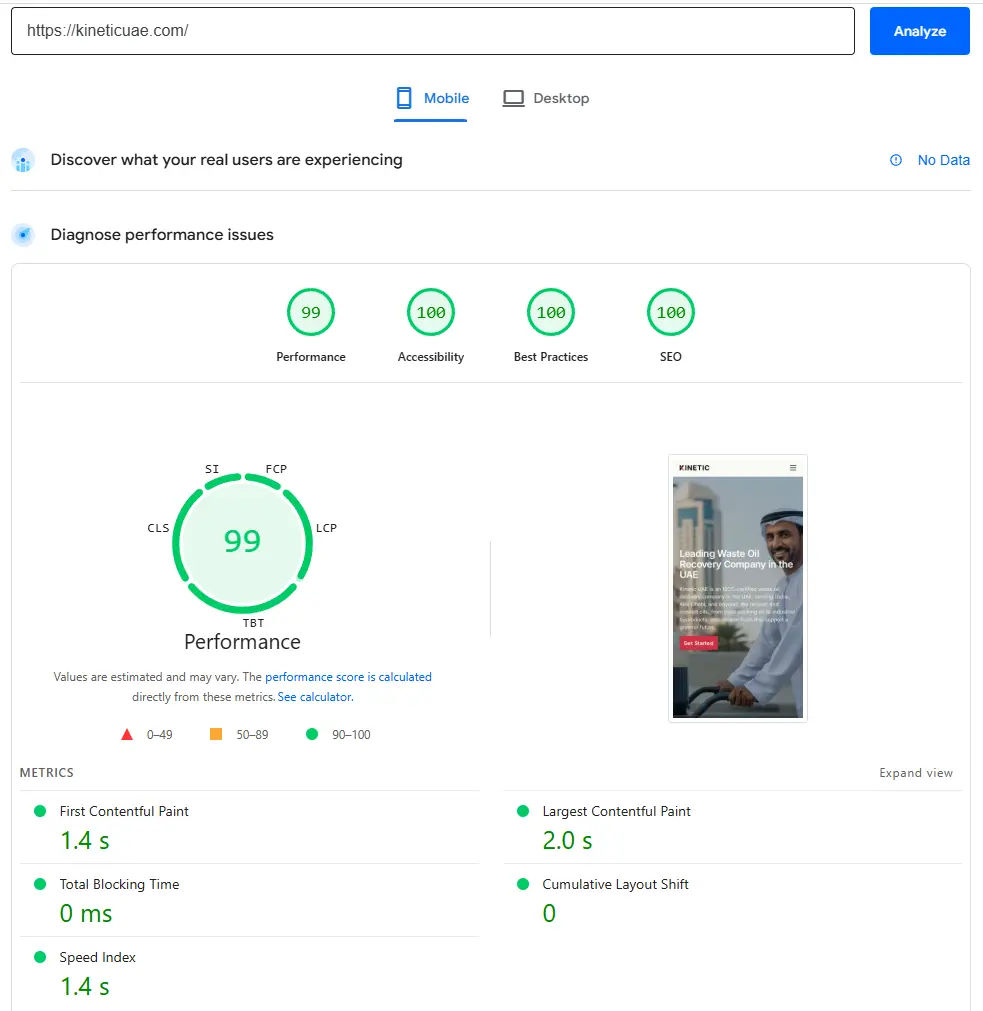
Speed optimization checklist
Test your website using Google PageSpeed Insights and check if:
- The page loads quickly (around 2–3 seconds)
- The layout does not jump while loading
- The page becomes interactive quickly
- Images are properly sized and compressed
Core Web Vitals influence search visibility. Performance problems are often caused by slow hosting, heavy themes, or poorly optimized scripts. Simply redesigning your website will not solve issues that originate from the underlying infrastructure.
Simple, logical navigation
Navigation controls how easily a visitor moves from interest to action. If they cannot find your service pages, pricing, or contact details quickly, most will not go looking. They will just leave.
Poor navigation also affects how search engines crawl your site. Both problems are worth fixing at the same time.
Website UX checklist for navigation clarity
Review your navigation structure and confirm:
• Core service pages are accessible within three clicks
• Menu labels clearly describe outcomes or services
• Top-level navigation includes no more than seven items
• Dropdown menus are structured and limited in depth
• Breadcrumbs are used on deeper pages where relevant
Generic menu labels such as “Solutions” or “What We Do” often obscure search intent and reduce clarity.
Navigation should reflect how customers search for services, not internal company hierarchy.
A clean internal linking structure improves both user experience and SEO performance by clarifying page relationships.
A call to action on every page
A business website should not only inform. It should guide action.
Each page should support a clear goal aligned with what the visitor is trying to accomplish. When calls to action are unclear, passive traffic increases and lead generation declines.
If your traffic is steady but conversions remain low, your CTAs may lack clarity, placement, or relevance to the visitor’s needs.
If this sounds familiar, you may want to read our guide on why your website gets traffic but no customers to understand the most common causes of conversion gaps.
Call-to-action audit checklist
Evaluate each page and confirm:
• There is one primary call to action
• The CTA matches the visitor’s stage in the buying process
• The CTA is visually distinct from surrounding elements
• Supporting content reinforces the action
• Forms request only essential information
Examples:
• Service page → Request a quote
• Case study → Book a consultation
• Blog post → Download a guide
Every page should move the user closer to conversion.
If analytics show strong engagement but low conversion rate, CTA placement, wording, or intent alignment is often the issue.
Clear conversion pathways reduce friction and improve lead quality.

Trust signals throughout your website
Before a visitor fills out your contact form or requests a quote, they are quietly evaluating whether your business is worth trusting. If the proof is not visible, most will hesitate and move on.
According to the Stanford Web Credibility Project, 75 percent of users judge a company’s credibility based on its website design alone. The checklist below helps you verify your trust signals are in the right places.
Trust signal audit checklist
Review your website for visible credibility elements:
• Testimonials that include real names and roles
• Case studies with measurable outcomes
• Client logos displayed with permission
• HTTPS security and valid SSL certificate
• Clear privacy policy and terms page
• Visible business contact information
Generic praise such as “Great service” does not reduce risk. Specific results increase confidence.
Example:
“Increased qualified leads by 32 percent within 90 days.”
Trust elements should appear near decision points, not isolated on a separate page.
Strategic placement of social proof supports higher conversion rates.
Easy contact options
When a visitor decides to contact you, the process should be immediate and frictionless.
Contact accessibility directly affects lead generation. If users struggle to find your phone number, contact form, or email, conversion rate declines.
A website audit should evaluate how easily a prospect can initiate communication.
Contact conversion checklist
Review your contact structure and confirm:
• A dedicated contact page is accessible from the main navigation
• Phone number and email are visible in the header or footer
• The contact form loads quickly and works on mobile
• Required form fields are limited to essential information
• A confirmation message explains the next step
• Submissions are tracked in analytics or CRM
At the consideration stage of the buying process, ease of communication influences perceived professionalism.
If contacting your business feels complicated, prospects may assume working with you will be similar.
Reducing contact friction increases form completion and improves lead quality.
Basic SEO built into your website
Website design without a strong SEO foundation limits long-term growth.
If technical SEO, site structure, and metadata are not configured correctly, organic traffic declines even after a redesign.
Search visibility depends on crawlability, structured content, and clear keyword targeting.
SEO audit checklist for business websites
Review the following structural elements:
• Unique meta titles and descriptions for each core page
• Proper heading hierarchy using one H1 and logical H2 and H3 structure
• Clean URL structure without unnecessary parameters
• XML sitemap submitted to Google Search Console
• Internal linking between related service and content pages
• Descriptive alt text for images
Search engines rely on internal structure to understand page relationships and topical relevance.
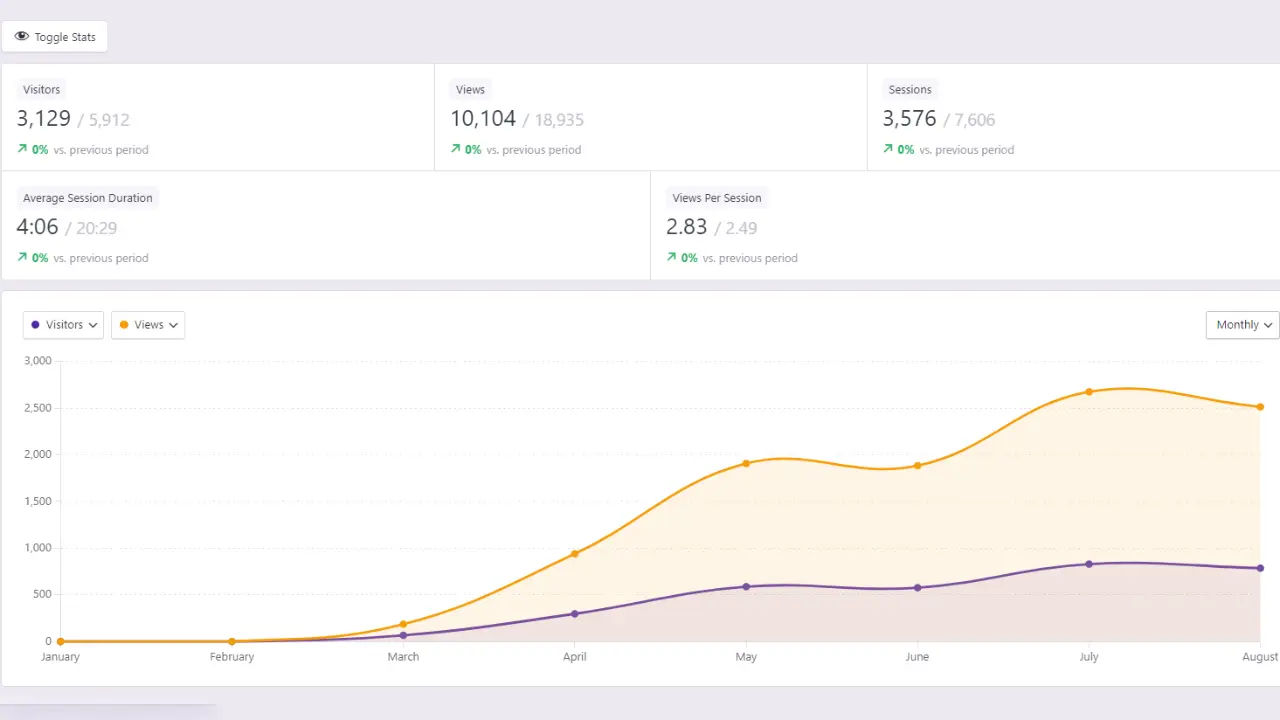
We have seen this firsthand in website rebuild projects where poor redirects, slow loading speeds, and missing SEO structure limited organic visibility. After rebuilding the site with proper technical foundations, traffic began to stabilize and grow.
For example, in our TUKR website redesign project, fixing technical SEO issues and rebuilding the site structure helped the website reach more than 1,000 steady monthly clicks from organic search.
Analytics connected and properly configured
Without analytics, website optimization is guesswork.
Tracking user behavior, traffic sources, and conversion data is essential for improving lead generation and marketing return.
A proper website audit includes reviewing analytics setup and goal configuration.
For businesses targeting users in the EU or other privacy regulated regions, analytics tracking should also include compliant cookie consent.
Analytics and conversion tracking checklist
At minimum, your website should include:
• Google Analytics installed correctly
• Defined primary conversion goals such as form submissions
• Event tracking for key actions such as button clicks
• Traffic source segmentation
• Device-based performance reporting
You should regularly monitor:
• Conversion rate by page
• Bounce rate by device
• Exit pages
• Form completion rate
• Traffic source performance
If high-traffic pages show low conversion rates, review messaging clarity, call-to-action placement, and user flow.
Data should guide design and SEO decisions rather than assumptions.
A website that is measured consistently becomes an acquisition channel instead of a static brochure.
Copy written for your customer, not your company
Most business websites talk about the company. Visitors only care about one thing: can you solve my problem?
Copy that leads with your credentials, your history, or your process loses people before they reach your CTA. Use the checklist below to make sure each service page is written for the reader, not the business owner.
Website copy audit checklist
Review each service page and confirm:
• The page targets one defined audience segment
• Benefits are presented before features
• Language is direct and easy to understand
• Objections are addressed clearly
• Claims are supported with proof or metrics
Compare the difference:
Instead of:
“We offer business consulting services.”
Use:
“We help small manufacturers reduce production costs and improve operational efficiency.”
Clear positioning improves engagement, increases qualified inquiries, and strengthens lead quality.
If traffic is steady but conversions are weak, messaging clarity is often the limiting factor.
Planning a redesign or performance upgrade?
A custom website should not be based on aesthetics alone. It should be built on performance insight.
If this checklist exposed gaps in your structure, speed, SEO, or conversion flow, the next step is a structured website performance review.
This evaluation covers:
• Conversion clarity and messaging
• Technical SEO and on-page structure
• Page speed and Core Web Vitals
• Navigation architecture
• Call-to-action pathways
From there, you receive a clear recommendation.
In some cases, targeted optimization is sufficient.
In others, a custom performance-focused rebuild is the right move.
If you are considering a redesign and want it built correctly from the foundation, request a structured website performance review.
Frequently asked questions
A web design checklist reviews the elements that affect usability, performance, and conversions. This includes messaging clarity, mobile responsiveness, page speed, navigation structure, calls to action, and basic SEO setup. It helps identify issues that may reduce engagement or lead generation.
Start by reviewing performance data. If traffic is steady but conversions are low, targeted improvements to messaging, calls to action, or structure may be enough. If the site is slow, difficult to scale, not mobile-friendly, or built on limiting infrastructure, a custom redesign may deliver better long-term results.
Clarity and structure have the strongest impact. Visitors need to immediately understand what you offer, who it is for, and what outcome to expect. Clear calls to action, fast page speed, logical navigation, and visible trust signals also directly influence conversion rate.
A structured website audit should be performed at least every six months to 1 year. However, key performance metrics such as conversion rate, bounce rate, and page speed should be reviewed monthly to identify issues before they affect traffic or lead generation.